7-Minute Read
The pandemic, social distancing, border closures, and lockdowns have disrupted our lives more than we ever could have imagined. Out of work, and disconnected from friends, family and communities, many of us have become detached from all that gives our lives meaning.
It’s not easy to find the motivation to stay fit and healthy during periods of uncertainty. Since we don’t know what our immediate futures hold, we’re always left asking ‘why?’ Why exercise, eat well, or even shower if we’re not going to see or touch another human being for weeks or months? Why work on your personal development when you don’t know what future you’re developing for? Why seek work when it seems nobody is hiring? Why educate yourself if it seems there are no jobs available when you’re done?
Some of you are already answering these questions with the answer that these acts benefit you in themselves, even if you don’t know the future. Exercise and a good diet promote neurochemical stability, helping you to feel good, and also helps you to look good, which helps you feel even better. Being clean and fresh feels better than being otherwise. Personal development improves every aspect of our lives. Education is its own reward. And you won’t find work if you don’t look for it.
But this isn’t how motivation works. Every act that we take is motivated. Every thought we think is motivated. We don’t do anything because somebody told us to, or because it’s a good idea, or ‘just because’. We only do the things we’re motivated to do. But what is motivation? It isn’t only doing things we’re excited to do. If you scratch your nose, it was a motivated act—something in your central nervous system (CNS) prodded you to do it. When you roll over in bed, it’s a motivated act—something in your body prodded you to change your position. Likewise, if you get up in the morning and go to a job that you hate, it’s also a motivated act, though a much more complicated one. Everything you do is motivated, and you don’t do anything that isn’t motivated.
There are many theories of motivation out there, but most of them treat humans as simple machines. Scratching your nose is one of those mechanically motivated actions. Your CNS receives a stimulus, like an itch, and sends a signal to respond, resulting in a scratch. However, many of our actions are far more complex. We don’t have a simple signal in the body telling us to exercise, or to shower, or to go to school, or to brush up your CV. We take these actions as a result of multiple stimuli, as well as our knowledge and experience, and according to our purpose. When we want to earn money, what makes some choose to get an education while others choose to become a drug dealer? This becomes more complicated, but it’s still motivation at work.
Some philosophies believe that we’re motivated to seek the good or the positive or happiness, but there’s too much evidence that that isn’t true. We’re motivated to alleviate or prevent the negative, not to grasp for the positive. Neither humans nor any other animal feel a need to do anything unless there’s something causing discomfort of some kind.
My theory of motivation, as outlined in my book Human Development, states that at any moment all human beings are acting to satisfy a need or rectify an insecurity over a future need. Though, while insecurity is about the future, it's also felt now, so it's considered an immediate need. While there’s debate over what our needs are, you won’t go wrong by using Abraham Maslow’s five categories of needs as your guide. So, they are the physiological needs of the body, safety and security, social, esteem, and self-actualization.
Maslow’s self-actualization can be very vague, but I consider it more as purpose. Nietzsche would have considered it the ‘will to power’ or a guiding principle. This is important because it decides how, or why you satisfy any of your other needs. There are a million ways for you to make money to gain access to the resources you need to satisfy many of your needs, but you’ll only do what aligns with your other needs and your purpose or guiding principle. Most people’s esteem and social needs, as well as their purpose cause them to want to be upstanding members of society, so they won’t be motivated to become a drug dealer, while somebody with a heightened need for money, power and popularity will.
Now, the problem comes when there is no guiding principle or purpose, or when you feel there is no purpose to be had. At any given moment there is a battle raging inside of us between our needs, insecurities and our ‘will to power’. Health and happiness happen when we align all of those and satisfy them all in a complementary fashion. For example, a happy, devout monk will satisfy his hunger according to the doctrine of his religion, sublimate his sexual energies, gain intimacy and belonging in brotherhood, and esteem in the strength of his conviction—all of his needs are satisfied according to his purpose.
The problem that the pandemic has forced on us is that it has taken away our immediate futures. We don’t know who or what we want to be because we don’t know what our options are. The future is so uncertain that we don’t know what to prepare for. So, while up until now you may not have had a clear purpose, you may at least have had a guiding principle—some idea of who you wanted to be—and you were attempting to satisfy your needs according to that principle. Or, for many people in the world, life and the future have always been uncertain and you’ve had to live like this all along.
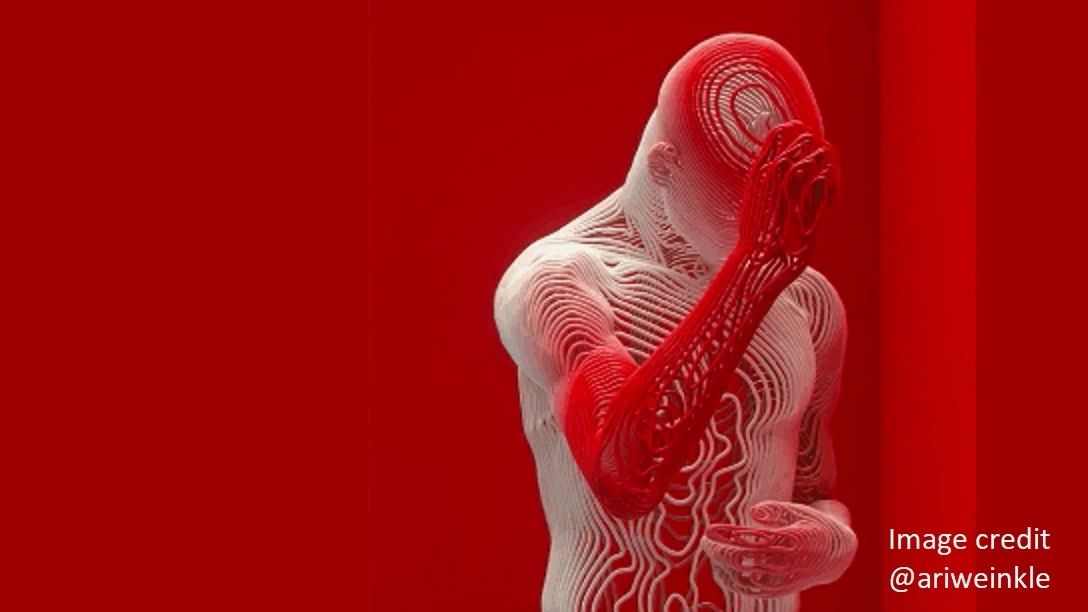
But when purpose is taken away, all that progress you made starts to unravel. Without a purpose there are no more meaningful accomplishments. Without meaningful accomplishments, your esteem starts to decrease because our motivational memories are short—our accomplishments from last year aren’t making us feel good anymore. When your esteem starts to decrease, it affects your social life, as you begin to feel lower than those around you, especially when they’re all posting about how ‘amazing’ their life is on social media. And most people’s social lives are in disarray now, anyway. When our esteem and social needs aren’t being met, we still need to satisfy the feeling of deprivation, but we learn to temporarily mute them with overeating or alcohol or drug abuse. This, of course, makes us unhealthy and increases our spending, which starts to affect our material survival and the satisfaction of our physiological needs. This is unraveling.
The more we unravel, the more desperate we become, and the more desperate we become, the more motivated we become. While you may not gain a grand purpose, you’ll at least become highly motivated to find some way to make money again, and then you'll work on other aspects of your development to enhance your opportunities.
While strong social programs certainly have their benefits, one of the major drawbacks is that it prevents people from gaining this ‘desperation as motivation’. You can unravel all the way to just above rock-bottom and then the government will help you to hover there—barely surviving and while eating, drinking and using your way through all your need deprivations for as long as they’re willing to pay for it.
Now, nobody reading this is waiting for, or looking forward to, hitting rock-bottom, so what can be done? First of all, I hope this information helps you to understand what you’re feeling during these, or during any hard times. Awareness of the problem is the first step to finding solutions. Once you’re aware of what you’re lacking in life, make your temporary purpose just sorting your life out. You don’t want to hit rock-bottom—nobody does. Try to address all of your needs, but a little at a time. If you make an elaborate plan with a strict diet and hardcore exercise without addressing your esteem and social needs, you’ll find it'll quickly unravel and then you’ll feel like even more of a failure.
Make a plan for how you want to address your health, your social needs, and your esteem needs. Write it down if you’re so inclined, or at least just make sure to think about each need and how you can satisfy them. Reach out to friends and family—even virtually, if you must. Find something you can do for a little bit each day which challenges you but also interests you. Change one small part of your diet—cut out one unhealthy thing or add something healthy. Start out doing just one exercise each day that you can do from home.
I guarantee you that if you make these small changes, you’ll start to notice a difference, and very quickly you’ll start to see a re-ravelling. Just remember to maintain balance. It is likely that one of these things will resonate with you more than the others, and maybe you’ll really dig into your challenge and forget about the rest, or you’ll spend all day talking to people on social media, or you’ll get hooked and spend all day exercising, but if you break the balance you’ll just unravel again, which will hurt your esteem even more.
Now, I know some of you are saying 'but you said we won't do something just because somebody tells us to', which is absolutely correct. If this post resonates with you at all, you already have the need pushing you to act. You can choose to attend to those needs however you want. Sure, you can scarf down a family-sized bag of potato chips while bingeing Netflix and try to forget about it, but there are alternatives. And when I say to start small, I mean miniscule. Eat your chips if you want, but also eat an apple, or avocado or something healthy. When you wake up, do 10 of some exercise, like pushups, crunches, air squats, etc. Just 10, and then go about your day. Arrange a 5-minute video call with somebody, or chat with somebody, or join an online community. Do something new: it could be a puzzle, a little reading, making something with your hands, cooking a new dish; anything that you can finish to say that you learned something new and accomplished something. Start miniscule. You already feel the need to do these things, and maybe feel you need to go deep into all these areas of your life, but start small and see how it feels. The most important thing is balance. I'll say it again, the most important thing is balance.
So, remember:
- make your temporary purpose to get your life in order
- plan to address all of your needs, even if just a little. Primarily focus on health, social needs, and esteem needs
- maintain a balance—don’t get caught diving into one thing and sacrificing the rest.
- we're unraveling because we don't have purpose but also because we're spending too much time comforting ourselves. If you go too hard in your re-raveling, you may burn yourself out too soon and unravel again. Start miniscule
- You’re not alone. Millions and billions are going through this. We’re in this together.
- This is a temporary fix. Use this time to also search for a larger purpose--something that interests you and makes you want to become a better version of yourself to excel at.
-Patrick Whelan